

Direct answer
Crimson Moon supports solo play or two-player online co-op, including cross-platform sessions. A duo shares a life pool, faces party-size scaling, can coordinate classless builds, and can pick up equipment that a partner replaces during the active run.- Party size
- 2 online players
- Failure resource
- Shared life pool
- Difficulty choice
- Set by the host
Two-player online co-op scope
Crimson Moon can be played alone or with one other player online, so a complete co-op party contains two Nephilim rather than a larger squad. The captured multiplayer guide describes missions and replayable runs as the activities available to the pair, while the Steam description confirms that playing with a friend is optional. This limit shapes every plan in the mode because each player has to bring a complete build instead of relying on three or four specialized teammates.
The captured material describes co-op as online-only and reports that one console or device cannot host two local players on the same screen. Cross-platform co-op is also confirmed in the official beginner material, although the collected files do not document cross-save, shared purchases, or cross-progression. Players should therefore treat platform access and session compatibility as separate from ownership of saves, characters, and store entitlements.
Host control at the War Table
The host chooses the run difficulty at the War Table before the first mission begins. That selection remains locked for the run in the host's world, and the captured difficulty guide says it cannot be changed between missions. A duo should agree on the tier before committing because a guest cannot quietly lower the setting after the party has already started its progression.
The current research set does not provide a reliable screen-by-screen lobby procedure. It does not freshly verify the labels for public hosting, private hosting, Quick Match, or join-by-code, even though older site content records those options from an earlier support snapshot. Use the current in-game interface as the final authority for invitations, and avoid promising a button name that may have moved after a patch.
Host authority also matters after the lobby because the documented difficulty selection belongs to the host's world. Nothing in the captured batch proves that a guest can carry that host's unlock state into a separate save or reproduce the same War Table choices later. Treat session control, character progression, and permanent ownership as different systems unless the game explicitly confirms that they travel together.
Shared lives and recovery
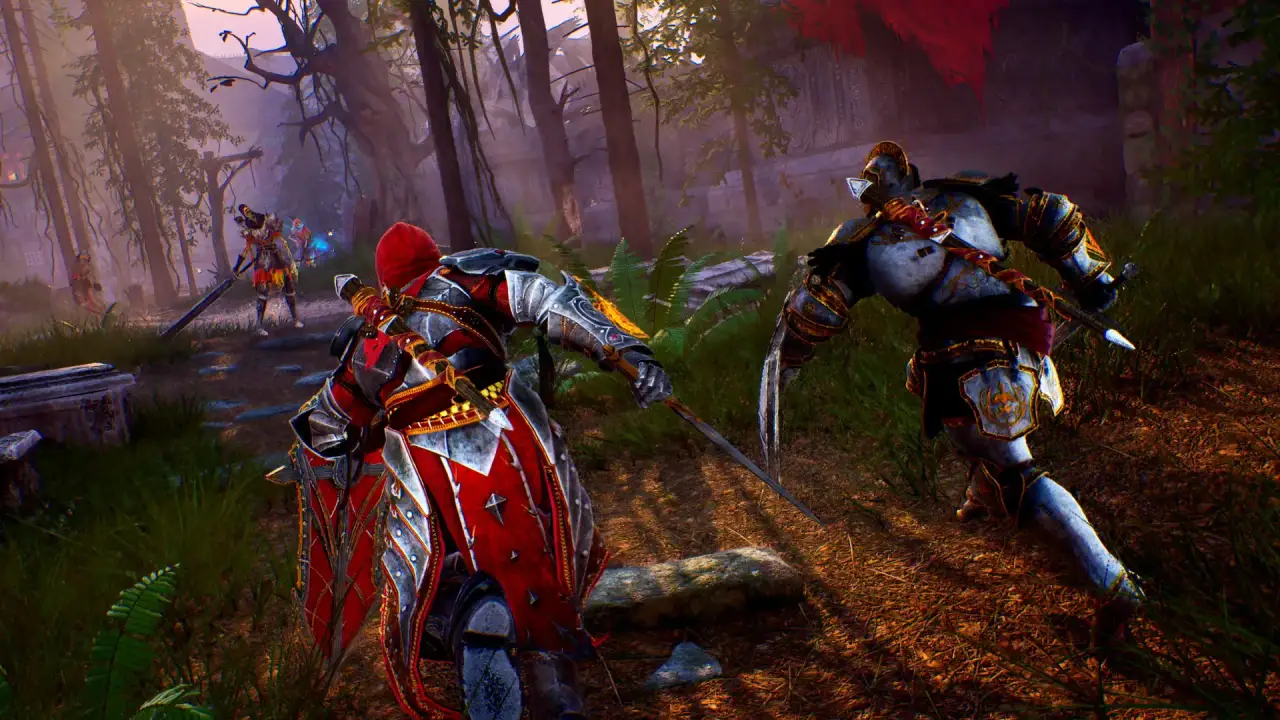
Co-op partners rely on a shared life pool rather than two fully separate failure budgets. The captured multiplayer guide says the pool allows the team to recover from death during a run, but exhausting it prevents either player from returning and ends the attempt. This turns an individual mistake into a party resource decision, so surviving a dangerous encounter can be more valuable than chasing one extra attack window.
A captured beginner guide also describes one Nephilim reviving the other after that player is downed. The sources do not establish the exact revive time, distance, invulnerability window, or number of lives at every difficulty, so those details should be read directly from the current build. The stable tactical lesson is narrower: preserve the shared pool, create space for recovery, and do not assume a partner's fall has no cost to the host.
Dynamic scaling for a duo
Adding a partner does not leave the solo encounter unchanged. The captured multiplayer guide reports that difficulty increases and enemy composition adjusts for co-op, while a separate beginner guide says bosses also scale for multiple players. The sources do not publish health multipliers, damage multipliers, spawn tables, or a formula that would let players calculate the exact increase.
Dynamic party scaling is separate from the difficulty tier selected at the War Table. A pair on Standard receives the co-op adjustment for that party size, while choosing a higher tier adds the documented tier rules on top of the session format. This distinction matters when comparing solo and duo clears because an easier experience with a friend may come from coordination and revives, not from the game leaving enemies at solo strength.
Equipment exchange during a run
The captured multiplayer guide documents a practical form of equipment sharing. When one player equips a newly found item, the replaced piece drops to the ground, and the partner can pick it up and use it. This is not evidence of a separate trade window, a permanent account transfer, or unrestricted movement of items from a stored collection.
A duo can still use the drop behavior to improve the active run. Before replacing a useful piece, check whether the partner's current build benefits from its Weapon Art, defensive value, status application, or passive condition. The evidence does not confirm what happens to a borrowed piece after failure or purification, so treat the exchange as a run-level opportunity until the current game explicitly shows its permanent ownership result.
This exchange is most useful when each player communicates before equipping a replacement. One person may see only a modest personal upgrade while the discarded piece completes a much stronger interaction for the partner, especially when status effects or defense are involved. The captured guide supports pickup of replaced equipment, but it does not support dropping arbitrary stored collection items on demand.
Complementary classless builds
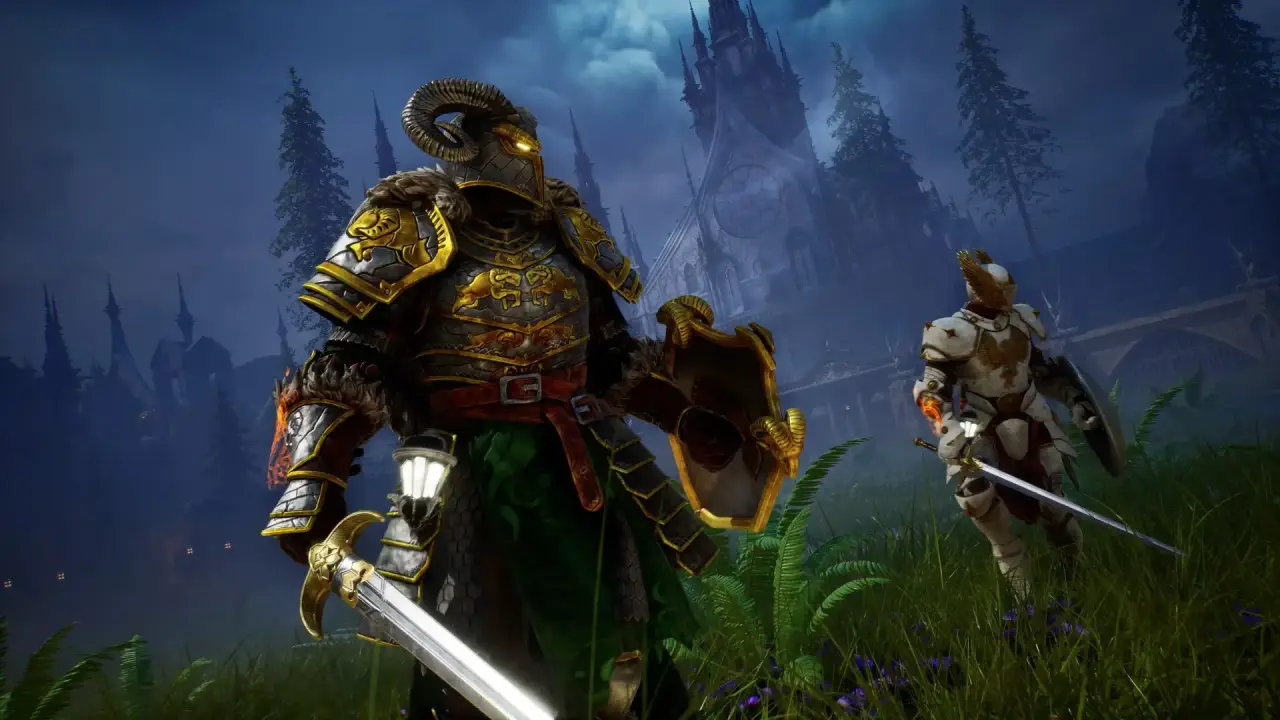
Crimson Moon does not lock either player into a formal tank, healer, or damage class. The official build explanation says gear, Weapon Arts, temporary Boons, and the selected Angel shape each build, and it specifically encourages co-op partners to coordinate those pieces. A strong duo can cover different needs while both characters remain capable of fighting and surviving on their own.
One practical pattern supported by the captured beginner material pairs a defensive sword-and-shield approach with a partner using ranged Weapon Arts or status effects. That example is a flexible template, not an official best composition or proof that one player must hold enemy attention. Choose repeatable triggers that work together, then leave room to adapt when Nexus Gates and field drops offer a stronger direction during the hunt.
Crossplay and platform access
Official beginner material states that Crimson Moon supports cross-platform co-op, and the captured game directory identifies PC, PlayStation 5, and Xbox Series X|S as launch platforms. The evidence supports playing across those platform families, but it does not show that crossplay expands the two-player cap. It also does not establish cross-progression, cross-save behavior, shared downloadable content, or account transfer between storefronts.
The captured multiplayer guide reports that console online play requires an eligible PlayStation Plus or Xbox Game Pass subscription, while Steam and Epic Games Store players do not need a console-style multiplayer fee. Subscription names, regional terms, and platform policies can change, so the store shown on the player's own console remains the final purchase check. A subscription requirement for multiplayer does not by itself mean the game is included in that subscription's catalog.
A reliable plan for duo runs
Begin by choosing a difficulty both players can clear consistently, then compare starting weapons, defensive options, and dependable combat triggers. Decide who has safer recovery tools and which build can control groups, but avoid inventing rigid roles that the classless system does not require. Once the run begins, evaluate found gear and Nexus Gate Boons as a team instead of selecting two unrelated collections of bonuses.
During encounters, protecting the shared life pool should take priority over a risky damage race. Use the documented equipment-drop behavior when a replaced item helps the partner, and reassess the plan after a major field upgrade changes one build's strengths. The sources support coordination, scaling, revives, and shared lives, but exact matchmaking screens and current network behavior remain version-sensitive and should not be presented as permanent rules.