

Direct answer
Crimson Moon gameplay combines Souls-inspired melee combat with replayable hunts. You fight through three missions and a World Boss, adapt with temporary Boons and found gear, then purify equipment to expand permanent loadout choices.- Combat
- Melee action RPG
- Structure
- Replayable hunts
- Co-op
- 2 players online
Core melee combat tools
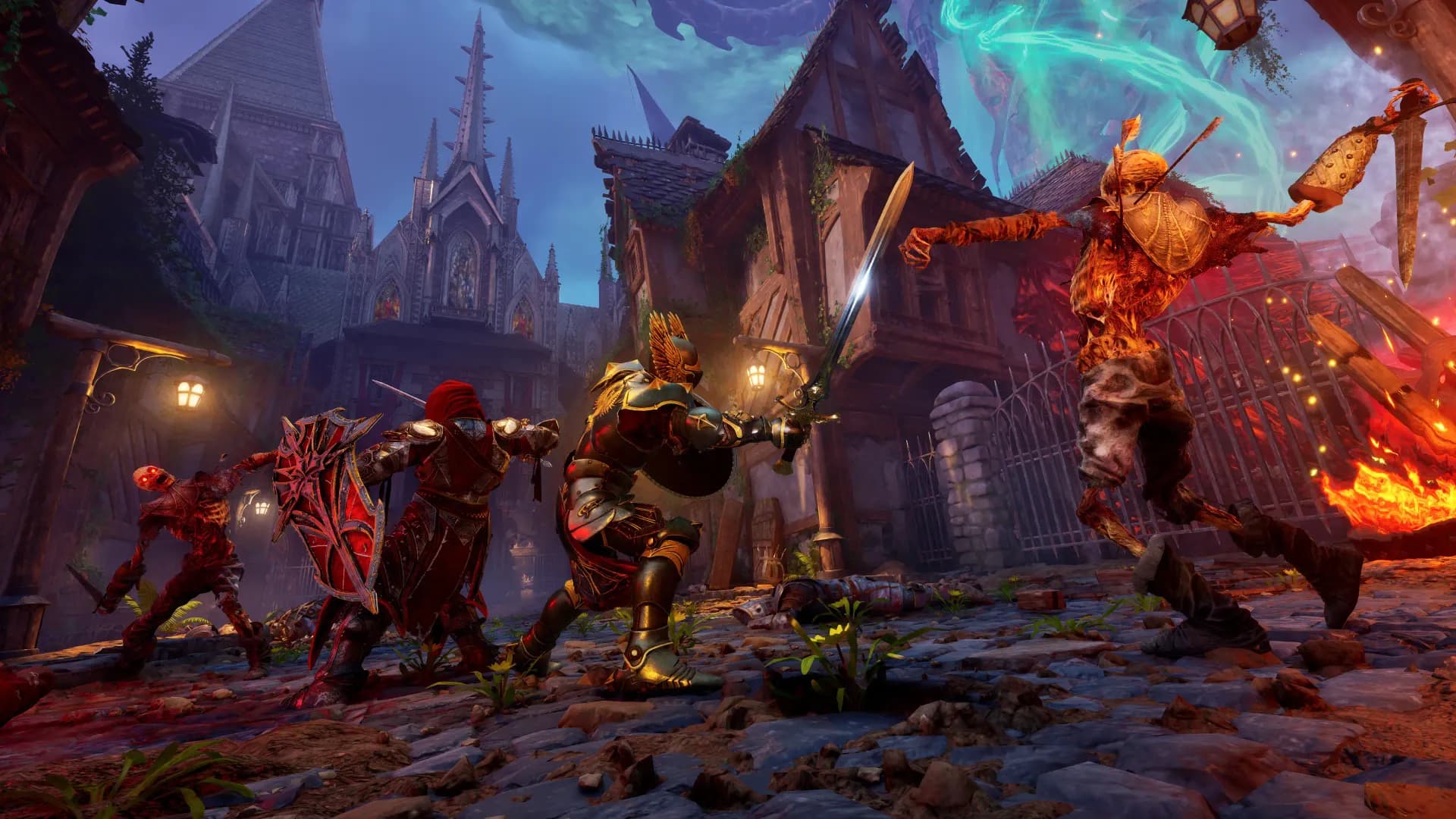
The captured gameplay material describes light and heavy attacks, dodges, jumps, blocks, parries, backstabs, and weapon-specific abilities. Throwing knives, bombs, and other consumables add utility alongside the equipped weapons. Combat is Souls-inspired, but the run structure and loadout systems give it a different rhythm from a single continuous campaign.
New players benefit from learning enemy windups before committing to long attack chains. A controlled dodge, block, or parry can protect the loot and progress already gathered during the hunt. The sources do not define one universally correct control scheme, and platform-specific bindings can change through patches.
Weapon Arts and resource timing
Weapon Arts give individual weapons an active ability beyond their normal attack pattern. The official build guide describes cooldowns, while captured creator material also discusses resource management when deciding when to use an ability. A useful Weapon Art can matter more to a coherent setup than a small raw-stat advantage.
Because a loadout carries both one-handed and two-handed options, players can reserve one ability for control and another for a damage opening. The precise cooldown, cost, and balance of each Art are version-sensitive. Detailed numerical tables should therefore be treated as To be confirmed unless checked against the current live build.
Angel Mode and empowered windows
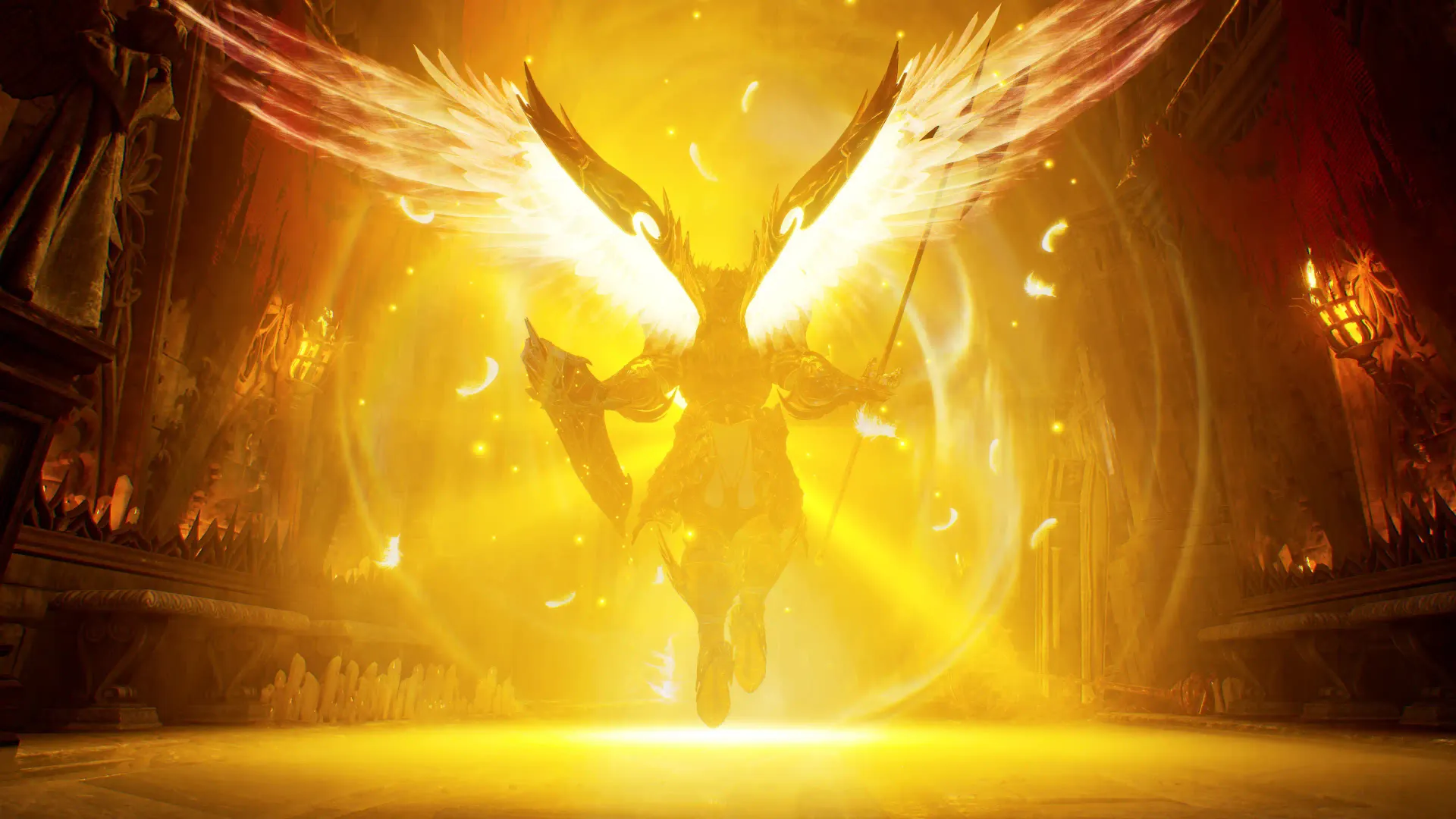
Official and captured gameplay sources describe angelic transformation as an important part of the Nephilim combat identity. Combat charges an Angel meter, and transformation creates a temporary empowered state. That limited window makes timing more important than activating it immediately whenever energy appears.
Captured beginner guidance recommends saving the meter for an elite encounter or boss phase where extra power can prevent a run-ending mistake. The selected Angel is part of preparation before the hunt and helps shape the combat plan. Exact bonuses, duration, and the complete Angel roster remain To be confirmed without current in-game verification.
The complete hunt loop
A hunt begins at Sanctus Clypeus, where you choose equipment, consumables, and an Angel before using the War Table. The current official explanation describes a full run as three missions followed by a World Boss. Returning to the hub between those missions does not finish the run, so preparation before the first mission matters.
Inside a mission, you clear objectives, fight enemies, explore the Ward, and collect equipment that can change the current build. Nexus Gates offer temporary Boons that remain active for the rest of that hunt. A completed run turns selected discoveries into permanent options through purification, creating the link between one run and the next.
Missions, Wards, and the World Boss
Each run is divided into missions rather than one uninterrupted level. A mission has objectives, enemy encounters, exploration opportunities, loot, and a boss before the player returns to Sanctus Clypeus. The official post-launch explanation says the active run continues across three missions and then ends with a World Boss encounter.
The short return to the sanctuary is not a full reset. The Loadout Station remains unavailable while the run is active, which means newly found gear supports the current attempt but does not let you rebuild from the permanent collection between every mission. Older preview layouts described demo content differently, so the launch structure should be used for current guidance.
Why exploring a Ward matters
Rushing directly toward a boss can leave useful progression behind. Captured official and guide material points to chests, elite enemies, Lore Scrolls, equipment, and mission rewards as reasons to search each area. Those discoveries can strengthen the current run or widen the options available in later hunts.
Lore Scrolls are particularly different from a temporary combat pickup. Returning them expands the pool of Boons that may appear in future hunts, while a Nexus Gate choice helps only the active hunt. The collected sources do not provide a complete map of every chest or Scroll location, so exact spawn routes remain To be confirmed.
Difficulty, scaling, and better rewards
Crimson Moon lets players select harder mission conditions as they progress. Official store copy connects rising difficulty with greater rewards, while captured guide material associates harder play with more experience and better-rarity equipment. The sources do not establish a universal drop table or exact percentage increase for every tier.
Co-op also uses dynamic scaling, so adding a second player is not presented as an automatic easy mode. The official support guide says difficulty and enemy composition adjust to party size. Players should judge a difficulty step by survival consistency and useful returns rather than assuming that the highest unlocked setting is always the efficient choice.
Solo play and the two-player limit
Crimson Moon supports one player solo or two players in online co-op. The PlayStation listing states one player and up to two online players, while the Xbox capability list states online co-op for two. The party cap is therefore one host plus one partner, not a three- or four-player squad.
Co-op is optional rather than required for the campaign loop. The official support guide says solo play is a complete designed experience and that the game adjusts when a second Nephilim joins. Local split-screen or couch co-op is not established by the collected sources and remains To be confirmed rather than assumed.
How purification creates permanent progress
Equipment found in Gildenarch begins as run loot rather than a permanent unlock. After a successful hunt, purification at Sanctus Clypeus adds the item to the permanent collection so it can support later starting loadouts. The official support material describes this as the boundary between temporary field power and lasting account progress.
A purified item starts from its collection version instead of preserving every random property of the copy found during the run. Upgrades at the Blacksmith can improve the minimum quality at which the item appears later. That makes purification valuable for widening future choices, while deeper-run drops can still replace starting equipment during an individual hunt.
Frequently asked questions
Is Crimson Moon only a roguelike?
It uses run-based temporary choices, but also keeps permanent progression through purified equipment, upgrades, and unlocked Boon options.
Can the whole loop be played solo?
Yes. Official support describes solo play as a complete designed experience.
Sources and evidence
Store, support, and captured guide references used for this page.